Reflections
Reflection for the vigil of Palm Sunday

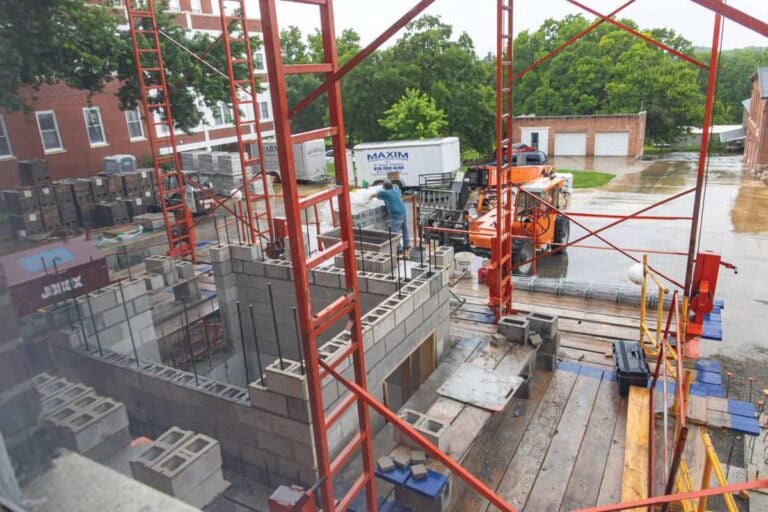
I have often noticed how much of our life depends on what we share in community: the buildings, cars to get somewhere, and even people’s gifts and skills that often supply what we do not have. All of these have been entrusted to us by God.
As I read tonight’s Gospel about Jesus entering Jerusalem, I noticed how he too, depends on a donkey that belongs to someone else and on his disciples to fulfill his need. He does not ask for “the best” or “the latest” but accepts what is available. There is a message in that image for those of us who live in community, sharing things in common: Jesus just does what he came to do with what he has been given. He relies on the openness of others and on his disciples to trust him enough to act. So, the entrance into Jerusalem begins with trust: trust that what is needed will be there and trust that others will respond.
Please notice that in this story, no one forgot to return the keys to the donkey for the next person.
All jokes aside. I recognize that pattern in my own life. Much of what allows me to live my vocation comes from what has been placed in my hands for a time: the ministries where I’ve served, the places I’ve been to, and the relationships that have transformed my life. But none of them are permanent; they have been given to me for a time. The problem begins when I forget this and begin to hold on too tightly. Then, what should be life-giving becomes a burden. But it is so hard to let go!
The disciples knew that struggle as well. Jesus had already spoken about his death more than once, and even the experience of the Transfiguration did not prepare them to accept it.
Letting him go felt impossible.
It is easy to remain focused on loss: the diminishment of our community, the empty places at chapel, the buildings we have had to let go. They shape how I look at the present, sometimes more than I realize.
And yet, as we rethink our spaces and ministries, I notice how often, in the history of this monastery, our sisters have done so much with so little: sharing spaces, adjusting plans, and working with what was available. I bet it wasn’t always easy, but the community managed, and God provided, moving the community where it needed to be.
With that perspective, the donkey in the Gospel becomes a symbol of what we have been entrusted with. Look around this chapel. Each of us is here because at some point in our lives, we heard: “The Master has need of you.” And we came from many different places and gathered under one roof.
We all came from somewhere, and brought our story and unique perspective with us. So does Jesus. He comes from the east, the direction of the rising sun, representing light, new beginnings, and life. Pilate, who will judge him later this week, comes from the west, the direction of the setting sun, symbolizing darkness, endings, and diminishing light.
In that contrast, we can see two ways of living life: as a beginning or as an end, guided by light or drawn into darkness. How do we want to live our lives? Where do we place our energy?
What in our daily life dims our light?
I too am learning to pay attention to what God is trying to tell me as we enter these Holy days: to receive what God is placing in our hands now and work with it, trusting that something as ordinary as a donkey can carry Jesus into Jerusalem. It is important to remember that our future does not depend on having everything figured out. It unfolds through what is already given, through what we are willing to offer, through the steps we can take now.
Our path may not look like it did in the past, but it is still a path where Christ chooses to enter. And he continues to do so through the “borrowed donkeys” that are available to us now. So, as we follow Jesus into Jerusalem, let us hold on to the image of an ordinary donkey that was tied in a village, a part of someone’s daily life; not trained for a special purpose, just there, waiting for when it was needed. That donkey played an important role in salvation history. May we live simply, keeping our eyes turned toward the light of the east, where life begins every day, and “run while we have the light of life, that the darkness of death may not overtake us.”